Tracked My Kids’ Learning for 6 Months: This Tool Blends Into Our Routine Effortlessly
Parenting feels like a constant balancing act—between work, chores, and trying to stay connected with your children’s growth. You want to support their learning, but between school updates, homework, and extracurriculars, it’s easy to miss the small wins. What if there was a way to keep track without adding more to your plate? I felt the same until I found a simple tool that quietly became part of our daily rhythm. It didn’t demand my attention. It didn’t flood my phone with alerts. Instead, it slipped in—like a quiet helper who knew just when to speak up. Over six months, it changed how I connect with my kids, not because it’s flashy or complicated, but because it finally made staying involved feel possible again.
The Moment I Realized I Was Missing the Small Steps
It was a Tuesday evening, and I was sitting at the kitchen table with my ten-year-old daughter, helping her with math homework. She was frowning at a word problem about fractions, and when I asked, ‘Did you learn this in class today?’ she looked up and said, ‘No, we did this last week.’ That hit me like a soft punch to the chest. Last week? And I hadn’t known? I thought back to the school newsletter I’d skimmed over coffee that morning—buried in a list of upcoming events was a single line about ‘introducing fraction operations in Grade 4.’ But there was no context, no detail, no way to know how she was really doing.
I love being a mom, but some days, it feels like I’m running behind the scenes of a play I’ve never rehearsed. You hear snippets—‘We had a test,’ ‘I made a poster,’ ‘We started a new book’—but the full story stays out of reach. I started noticing how much I was missing: the moment my son finally understood multiplication, the pride in my daughter’s voice when she read her first long chapter on her own. These weren’t just academic milestones—they were emotional ones. And I wasn’t there for them.
That night, I realized something important: it wasn’t that I didn’t care. I was doing everything I could just to keep the house running, meals on the table, and laundry folded. The problem wasn’t my effort—it was the system. Or rather, the lack of one. I wanted to be involved, not just informed. I wanted to celebrate the small things, not just react to the big ones. But without a clear window into their school days, I was always one step behind. And that gap? It wasn’t just about grades. It was about connection.
Why Most Tools Feel Like Extra Work—Not Help
So, I started looking for solutions. I downloaded every family organizer app I could find. I tried shared calendars, color-coded spreadsheets, even a whiteboard on the fridge with sticky notes. At first, it felt promising. I’d log in every night, determined to stay on top of things. But within weeks, the calendar entries stopped. The spreadsheet sat untouched. The sticky notes? They got used for grocery lists instead.
Here’s what I learned: most tools assume you have time to manage them. They ask you to log in, update, sync, and remind. They turn parenting into data entry. And when you’re already tired, that extra step—no matter how small—feels like too much. One app sent me three notifications a day: a summary, a reminder, and a ‘fun fact’ about my child’s learning style. I turned them all off by day four. Another required me to manually input homework assignments, quiz scores, and teacher feedback. I lasted two weeks before giving up. It wasn’t the tech that failed me—it was the friction.
I remember talking to another mom at soccer practice. ‘I use that school portal,’ she said. ‘But I only check it when the teacher emails me.’ I nodded. That was me too. The information was there, but it was buried under clunky menus, unclear labels, and too many clicks. And by the time I found it, the moment had passed. My son had already moved on from the science project he was so excited about. My daughter had forgotten the story she’d written in class.
What I really needed wasn’t another app that demanded my attention. I needed something that respected my time. Something that didn’t ask me to become a project manager of my children’s education. I wanted to be a mom first—someone who listens, encourages, and shows up. The tool, if there was one, had to work quietly in the background, like a well-placed nightlight—only visible when you need it, but always there.
How One Tool Disappeared Into Our Daily Life
Then, one Monday morning, my daughter said something that caught me off guard. ‘Mom, did you see the video Ms. Lee posted?’ I blinked. ‘What video?’ She grabbed the tablet and pulled up a short clip—just 45 seconds—of her class doing a hands-on experiment with magnets. There she was, laughing as her paperclip jumped to the magnet. ‘We’re learning about forces!’ she said, beaming. I hadn’t known about this. But somehow, the video had shown up in my feed—no login, no digging, no extra steps. Just a simple, joyful moment, delivered like a postcard from her school day.
That was my first real encounter with the tool, though I didn’t even know its name at the time. It wasn’t pushed on me. It wasn’t sold with flashy promises. It was introduced quietly by her teacher, who started posting short updates: photos of student work, one-minute videos of classroom activities, quick notes about what the kids were exploring. And because it was linked to our family account, I saw it the moment it was shared—on my phone, on the tablet, even on the smart display in the kitchen.
What surprised me most was how little effort it took to stay informed. I didn’t have to remember to check. I didn’t have to log in with a password or navigate confusing menus. The updates came to me, naturally, like messages from a friend. And because they were short and visual, I could watch one while waiting for the kettle to boil or during a quiet moment before bed. No pressure. No guilt. Just connection.
Over time, I started noticing patterns. I saw when my son struggled with long division—not because he told me, but because his teacher shared a gentle reminder about common mistakes, along with a fun practice game. I noticed when my daughter lit up during creative writing time, her stories getting longer and more detailed with each post. These weren’t formal reports or graded assignments. They were glimpses—real, unfiltered moments of learning in action. And because I saw them as they happened, I could respond in real time. ‘I saw your story today—can you tell me more about the dragon?’ That question opened a conversation that lasted half an hour.
The Real Magic: Learning Becomes a Shared Conversation
Before this tool, dinner table talk often followed the same script. ‘How was school?’ ‘Fine.’ ‘What did you learn?’ ‘Stuff.’ It wasn’t that my kids were hiding anything. They were just tired, and the questions felt like a quiz. But something shifted after the updates started coming through. Now, I could ask better questions—specific, warm, and grounded in what I’d already seen.
One night, I mentioned a math game I’d seen in a video. My son’s eyes lit up. ‘Oh! We played that today! I got the highest score!’ And just like that, he was talking—really talking—about what he’d learned. Another time, my daughter showed me a drawing she’d uploaded from art class. ‘I used shading for the first time,’ she said, pointing to the edges of a tree. ‘Ms. Lee said it made it look real.’ I hadn’t known she was learning about shading. But because I saw it, I could celebrate it. And that made all the difference.
These weren’t just academic wins. They were emotional ones. My kids felt seen. And I felt like I was finally part of their world, not just an observer on the outside. The tool didn’t replace our conversations—it deepened them. It gave us shared moments to build on, common ground to explore. Instead of fishing for details, I could say, ‘I loved how you explained the water cycle in your video,’ and watch my son sit up a little taller, pride glowing in his eyes.
Even my husband got involved. He travels for work, so he often misses the day-to-day. But now, he checks the updates during his layovers. ‘I saw the science fair project photos,’ he told me last week. ‘I can’t wait to hear more when I get home.’ That small comment meant everything. For the first time, he felt connected—even from 2,000 miles away. Technology didn’t replace our family time. It made it richer.
Making It Work for Any Family, Without Tech Stress
I know what you’re thinking: ‘This sounds great, but I’m not tech-savvy. What if I mess it up?’ I felt the same way at first. But here’s the truth—this isn’t about being good with tech. It’s about being consistent and intentional. The setup took less than ten minutes. The teacher sent a simple link. I clicked it, added my email and my husband’s, and that was it. No passwords to remember. No complicated settings.
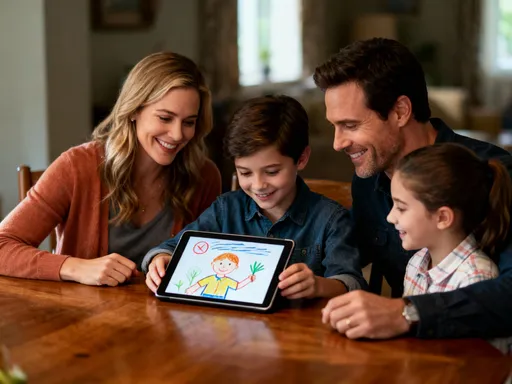
We decided to use the family tablet as our main screen—no need for every child to have a phone. Each morning, during breakfast, one of them scrolls through the latest updates while eating cereal. It’s become part of our routine, like brushing teeth or packing lunch. We don’t spend hours on it. Just a few minutes—enough to see what’s new, what’s coming up, and what might be worth talking about later.
One thing that helped was customizing the notifications. I turned off everything except direct updates from teachers. No promotional messages, no ‘fun facts,’ no reminders about school events—I get those from the newsletter. This way, my phone isn’t buzzing all day, and I don’t feel overwhelmed. The updates come through quietly, and I check them when I’m ready. It’s not urgent. It’s meaningful.
And if you’re worried about screen time, here’s what works for us: we keep it short, focused, and positive. It’s not about scrolling endlessly. It’s about connection. We often watch a video together, laugh at a silly moment, or talk about a project. It’s become a bridge between school and home, not a distraction from it. You don’t need the latest device or the fastest internet. You just need one device the family can share and a few minutes each day.
Beyond Academics: Seeing Growth in Unexpected Ways
What I didn’t expect was how much I’d learn about my children beyond the curriculum. The updates didn’t just show me what they were studying—they showed me how they were growing. I saw my son take a risk and present his opinion in front of the class, his voice a little shaky but determined. I watched my daughter work through frustration when her science experiment didn’t go as planned, then try again with a new idea.
These moments weren’t graded. They weren’t part of a report card. But they were everything. Resilience. Curiosity. Courage. And because I saw them, I could name them. ‘I noticed how you didn’t give up on that project,’ I told my daughter. ‘That’s what real learning looks like.’ Her face softened. ‘I thought you’d be mad I didn’t get it right.’ ‘I’m proud of you for trying,’ I said. That conversation did more than boost her confidence—it strengthened our bond.
Before, I might have only noticed the end result—the grade, the final project. But now, I see the journey. I see the effort, the questions, the small breakthroughs. And that’s changed how I praise them. Instead of ‘Great job on the A,’ I say, ‘I love how you explained your thinking in that math problem.’ The focus has shifted from performance to process. And that, I’ve realized, is where real growth happens.
Even our family culture has shifted. We talk more about learning as something joyful, not just something required. We celebrate mistakes as part of the process. And my kids know I’m paying attention—not just to the outcomes, but to their effort, their courage, their curiosity. That kind of attention? It’s a gift. And it’s one that keeps giving.
A Calmer, Closer Family—One Small Update at a Time
After six months, I can honestly say our family feels calmer, more connected, and more in sync. I’m not chasing information anymore. I’m not guessing what my kids need. I’m right there with them, moment by moment, even when I’m not physically in the classroom. The stress of feeling out of touch has lifted. The guilt of missing out has faded. And in its place? A quiet joy—knowing I’m part of their learning journey in a real, meaningful way.
The tool didn’t change everything overnight. But it changed enough. It removed the friction. It made staying involved effortless. And when technology fades into the background, what’s left is what matters most—time, attention, and connection. I’m not a perfect mom. I still burn dinner and forget permission slips. But I’m more present. I ask better questions. I celebrate the right things. And my kids feel it.
If you’re feeling like you’re missing the small steps, I want to tell you this: you’re not alone. And you don’t need to do more. You don’t need another complicated system or another app that demands your time. You just need one small change—one tool that works with your life, not against it. Look for something that feels light, simple, and human. Something that doesn’t ask you to become a tech expert, just a loving parent.
Because that’s the real goal—not perfect tracking, not flawless organization. It’s about staying in tune. It’s about turning ‘How was school?’ into a conversation that matters. It’s about seeing your child grow, not just academically, but as a person. And sometimes, all it takes is one quiet update to make that possible. Small changes, after all, can nurture the biggest relationships. And isn’t that what we all want?”